

Excessive calcium (Ca) and magnesium (Mg) ions in water, commonly referred to as hard water, present obstacles for both industrial and domestic applications. Hardness can be categorized into temporary and permanent types, with temporary hardness stemming from calcium and magnesium carbonates and bicarbonates, while permanent hardness arises from other dissolved minerals.
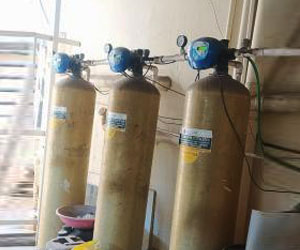
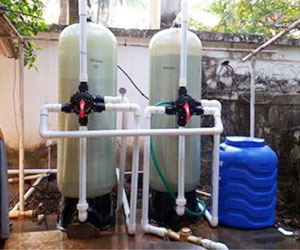
The hardness of water escalates with higher levels of calcium and magnesium ions, originating predominantly from limestone deposits and carbon dioxide in atmospheric and groundwater sources. Softening hard water is frequently accomplished through ion exchange processes. These processes involve the removal of calcium and magnesium ions and their substitution with sodium ions, rendering the water softer and more suitable for various uses.

Ca (HCO3)2 + Na2 R = RCa + NaHCO3
CaSO4 + Na2 R = RCa + Na2SO4MgCl2 + Na2
R = RMg + NaCl
RCa + NaCl = RNa + CaCl2
RMg + NaCl = RNa + MgCl2




WEBSITE DESIGN AND MAINTAINED BY CLEMENCE WEB SOLUTIONS