Complete Guide to Reverse Osmosis Water Treatment Systems
Clean and safe water is essential for residential, commercial, and industrial applications. However, many water sources contain dissolved salts, chemicals, bacteria, viruses, and other contaminants that affect water quality. Therefore, advanced purification systems have become increasingly important. Among all available technologies, Reverse Osmosis (RO) is one of the most effective and widely used water treatment methods.
As a result, Reverse Osmosis Plants are commonly installed in homes, industries, hospitals, hotels, pharmaceutical companies, and packaged drinking water plants to produce high-quality purified water.
What Is a Reverse Osmosis (RO) Plant?
A Reverse Osmosis Plant is an advanced water purification system that removes dissolved impurities, salts, microorganisms, and harmful contaminants from water through a semi-permeable membrane.
Unlike conventional filtration systems, RO technology removes even microscopic particles and dissolved solids. Consequently, it produces clean, safe, and high-quality water suitable for drinking and industrial applications.
Moreover, RO plants improve water taste, clarity, and overall quality while ensuring compliance with water safety standards.
What Is Reverse Osmosis?
Reverse Osmosis is the opposite of the natural osmosis process. In natural osmosis, water flows from a low-concentration solution to a high-concentration solution through a semi-permeable membrane.
However, in Reverse Osmosis, external pressure is applied to force water through the membrane. As a result, contaminants remain on one side while purified water passes through the membrane.
Therefore, the RO process effectively separates dissolved salts, minerals, and impurities from water.
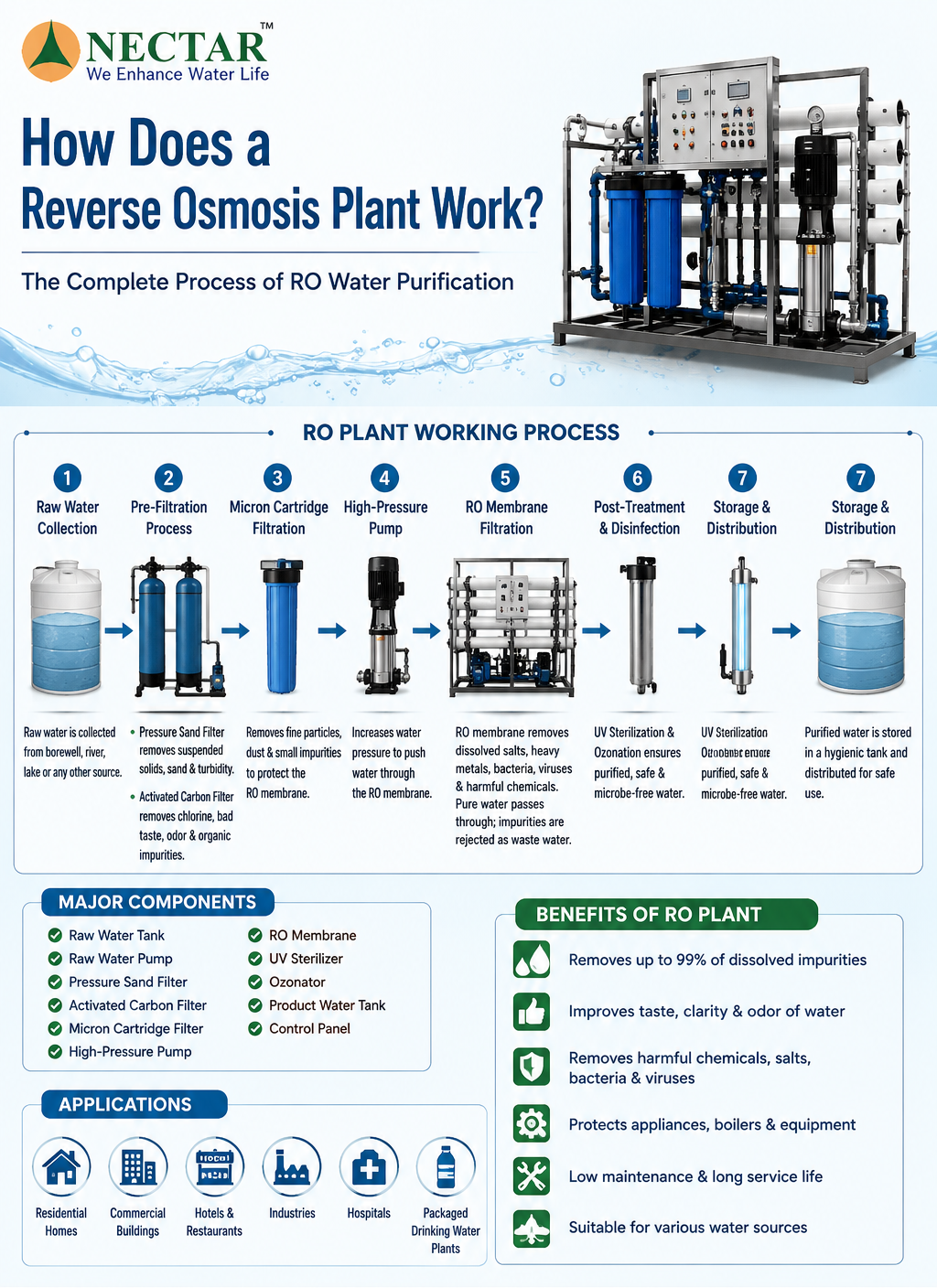
How Does a Reverse Osmosis Plant Work?
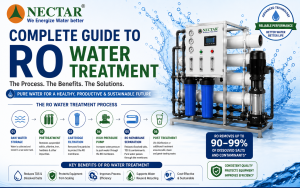
A Reverse Osmosis Plant works through multiple stages of water treatment. Each stage plays a crucial role in producing purified water.
Step 1: Raw Water Collection
Initially, raw water from borewells, municipal supplies, rivers, lakes, or other sources enters the treatment system.
Because raw water contains various contaminants, pre-treatment becomes necessary before the RO process begins.
Step 2: Pre-Filtration Process
Before reaching the RO membrane, water passes through several pre-treatment stages.
Pressure Sand Filter
The Pressure Sand Filter removes:
- Suspended solids
- Sand particles
- Silt
- Turbidity
As a result, larger impurities are eliminated before further treatment.
Activated Carbon Filter
Next, water enters the Activated Carbon Filter.
This stage removes:
- Chlorine
- Organic compounds
- Bad taste
- Unpleasant odours
Consequently, the RO membrane remains protected from chemical damage.
Step 3: Micron Cartridge Filtration
After carbon filtration, water passes through micron cartridge filters.
These filters remove:
- Fine suspended particles
- Dust
- Small contaminants
Therefore, only clean water reaches the RO membrane.
Step 4: High-Pressure Pump
The High-Pressure Pump increases water pressure before it enters the RO membrane.
Because the RO membrane requires sufficient pressure for separation, this step is critical for efficient operation.
As a result, water molecules are forced through the membrane while contaminants are rejected.
Step 5: Reverse Osmosis Membrane Filtration
The RO membrane is the heart of the system.
During this stage:
- Dissolved salts are removed.
- Heavy metals are rejected.
- Bacteria and viruses are eliminated.
- Harmful chemicals are filtered out.
- Excess minerals are reduced.
Consequently, highly purified water passes through the membrane while concentrated contaminants are discharged as reject water.
Step 6: Post-Treatment and Disinfection
After RO filtration, purified water undergoes additional treatment to ensure safety and quality.
UV Sterilization
UV systems destroy:
- Bacteria
- Viruses
- Microorganisms
Therefore, water becomes microbiologically safe.
Ozonation
Ozone treatment further disinfects water and improves storage stability.
As a result, water remains fresh and safe for longer periods.
Step 7: Storage and Distribution
Finally, purified water is stored in hygienic storage tanks before distribution.
Consequently, users receive clean, safe, and high-quality water for their intended applications.
Major Components of an RO Plant
A standard Reverse Osmosis Plant typically includes:
- Raw Water Tank
- Raw Water Pump
- Pressure Sand Filter
- Activated Carbon Filter
- Micron Cartridge Filter
- High-Pressure Pump
- RO Membrane
- UV Sterilizer
- Ozonator
- Product Water Storage Tank
- Control Panel
Therefore, each component contributes to efficient water purification and system performance.
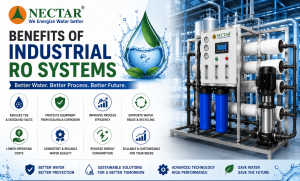
Benefits of Reverse Osmosis Plants
Superior Water Purification
RO systems remove up to 99% of dissolved impurities and contaminants.
Improved Water Taste
Furthermore, RO-treated water tastes cleaner and fresher.
Removal of Harmful Contaminants
RO technology effectively removes:
- Dissolved salts
- Heavy metals
- Bacteria
- Viruses
- Chemicals
Low Maintenance
Modern RO systems require minimal maintenance while providing reliable performance.
Suitable for Various Water Sources
Consequently, RO plants can treat:
- Borewell water
- Municipal water
- Brackish water
- Surface water
Applications of Reverse Osmosis Plants
Because of their efficiency and reliability, RO Plants are widely used in:
Residential Applications
- Homes
- Apartments
- Villas
Commercial Applications
- Hotels
- Restaurants
- Hospitals
- Schools
- Shopping complexes
Industrial Applications
- Pharmaceutical industries
- Food and beverage industries
- Textile industries
- Electronics manufacturing
- Chemical processing industries
Packaged Drinking Water Plants
RO systems are also used extensively in bottled water and packaged drinking water production facilities.
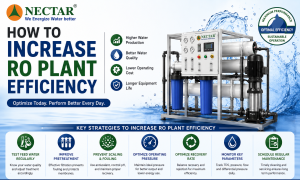
How to Improve RO Plant Performance
To ensure maximum efficiency:
- Conduct regular water quality testing
- Replace filters on schedule
- Clean RO membranes periodically
- Monitor operating pressure
- Service pumps and valves regularly
As a result, the system maintains optimal performance and longer service life.
Conclusion
Reverse Osmosis Plants are among the most effective water purification systems available today. By using advanced membrane technology, they remove dissolved salts, harmful contaminants, bacteria, viruses, and impurities from water.
Moreover, RO systems improve water quality, protect equipment, and provide safe water for residential, commercial, and industrial applications. Therefore, understanding how a Reverse Osmosis Plant works helps users make informed decisions when selecting a water treatment solution.
Investing in a high-quality RO Plant ensures reliable access to purified water, lower maintenance costs, and long-term operational efficiency.