Understanding the Difference Between Hard Water and Soft Water
Water is an essential part of everyday life, from drinking and cooking to bathing and cleaning. However, not all water is the same. Depending on its mineral content, water is classified as either hard water or soft water. Although both are commonly used in households, they differ significantly in terms of quality, benefits, and impact on your health and home.
Therefore, understanding the difference between hard water and soft water can help you choose the best solution for your family’s needs. Moreover, selecting the right water treatment system can protect your appliances, plumbing, skin, and hair while reducing long-term maintenance costs.
What Is Hard Water?
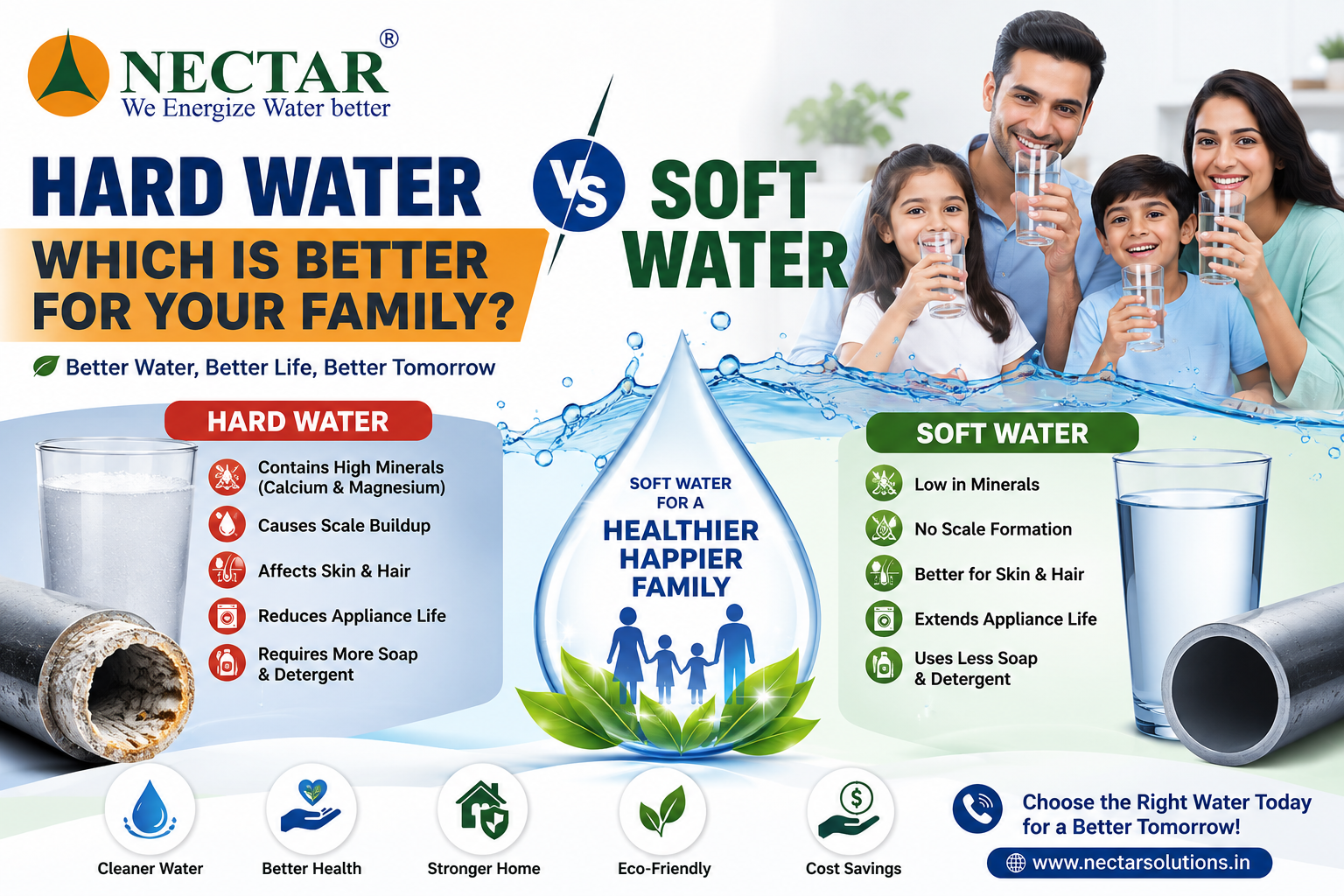
Hard water contains high concentrations of dissolved minerals, mainly calcium and magnesium. These minerals naturally enter the water as it passes through rocks and underground soil before reaching your home.
Although hard water is generally safe to drink, it creates several household problems over time. Consequently, many homeowners experience scale buildup, damaged appliances, dry skin, and poor soap performance.
Common Sources of Hard Water
- Borewell water
- Underground water
- Well water
- Municipal water with high mineral content
What Is Soft Water?
Soft water contains very low levels of calcium and magnesium minerals. In most cases, it is produced by a Water Softener System, which removes hardness-causing minerals using advanced ion-exchange technology.
As a result, soft water is more suitable for daily household activities, including bathing, washing, cooking, and cleaning.
Furthermore, soft water helps maintain healthier skin, softer hair, and better-performing household appliances.
Hard Water vs Soft Water: Key Differences
| Feature | Hard Water | Soft Water |
|---|
| Mineral Content | High calcium and magnesium | Very low mineral content |
| Soap Lather | Poor | Excellent |
| Scale Formation | Heavy | None |
| Appliance Life | Reduced | Extended |
| Plumbing Protection | Scale buildup | Clean pipes |
| Skin Care | Causes dryness | Keeps skin soft |
| Hair Care | Makes hair rough | Improves hair texture |
| Cleaning Efficiency | Requires more detergent | Uses less soap and detergent |
How Hard Water Affects Your Family
Because hard water contains excess minerals, it can create several problems in your daily life.
Dry Skin
Hard water leaves mineral deposits on the skin after bathing. Consequently, the skin loses its natural moisture and becomes dry, rough, and itchy.
Hair Problems
Furthermore, hard water makes hair:
- Dry
- Frizzy
- Dull
- Difficult to manage
As a result, many people experience increased hair fall and scalp irritation.
Scale Buildup
Calcium and magnesium deposits accumulate inside:
- Water heaters
- Geysers
- Washing machines
- Dishwashers
- Pipes
Therefore, appliance efficiency decreases while maintenance costs increase.
Higher Utility Bills
Because scale reduces heating efficiency, appliances consume more electricity.
Consequently, homeowners often notice higher monthly energy bills.
Benefits of Soft Water
Installing a water softener provides numerous advantages for your entire family.
Healthier Skin
Soft water removes soap completely and does not leave mineral residue.
As a result, your skin feels smoother, healthier, and more hydrated.
Softer Hair
Soft water allows shampoos and conditioners to work effectively.
Consequently, hair becomes softer, shinier, and easier to manage.
Because soft water prevents scale formation, household appliances operate more efficiently.
Therefore, maintenance costs decrease while equipment lasts longer.
Better Cleaning
Soft water improves the effectiveness of:
- Soap
- Shampoo
- Laundry detergent
- Dishwashing liquid
As a result, clothes become cleaner, dishes sparkle, and cleaning becomes easier.
Lower Maintenance Costs
Furthermore, homeowners spend less on plumbing repairs, appliance servicing, and cleaning products.
Consequently, soft water provides significant long-term savings.
Which Water Is Better for Drinking?
Hard water naturally contains calcium and magnesium, which are beneficial minerals. However, excessive hardness may affect the taste of water and contribute to scale buildup in plumbing systems.
On the other hand, soft water is excellent for household use because it protects appliances and improves cleaning efficiency. For drinking purposes, many families combine a Water Softener with a Reverse Osmosis (RO) System to achieve both softness and high-quality purified drinking water.
Therefore, this combination offers the best overall solution for homes using borewell or hard water.
Do You Need a Water Softener?
You may need a Water Softener if you notice:
- White scale deposits on taps
- Dry skin after bathing
- Hair becoming rough or frizzy
- Reduced water pressure
- White stains on bathroom tiles
- Appliances requiring frequent repairs
- Increased soap and detergent consumption
If you experience these issues regularly, installing a water softener can permanently solve hard water problems.
Why Choose a Water Softener for Your Home?
A modern Water Softener System provides:
- Continuous soft water supply
- Automatic operation
- Low maintenance
- Reduced scale formation
- Better appliance performance
- Improved skin and hair health
- Lower electricity bills
- Long-term savings
Therefore, investing in a quality water softener is one of the smartest decisions for protecting your home and family.
Both hard water and soft water have their characteristics. However, when it comes to protecting your family’s health, household appliances, plumbing systems, and daily comfort, soft water offers significant advantages.
Moreover, a reliable Water Softener System removes hardness-causing minerals, improves water quality, and reduces maintenance costs. As a result, your family enjoys healthier skin, softer hair, cleaner clothes, and longer-lasting appliances.
If your home relies on borewell or hard water, switching to a water softener is a practical investment that delivers lasting benefits for years to come.