The Hidden Effects of Hard Water on Your Daily Life
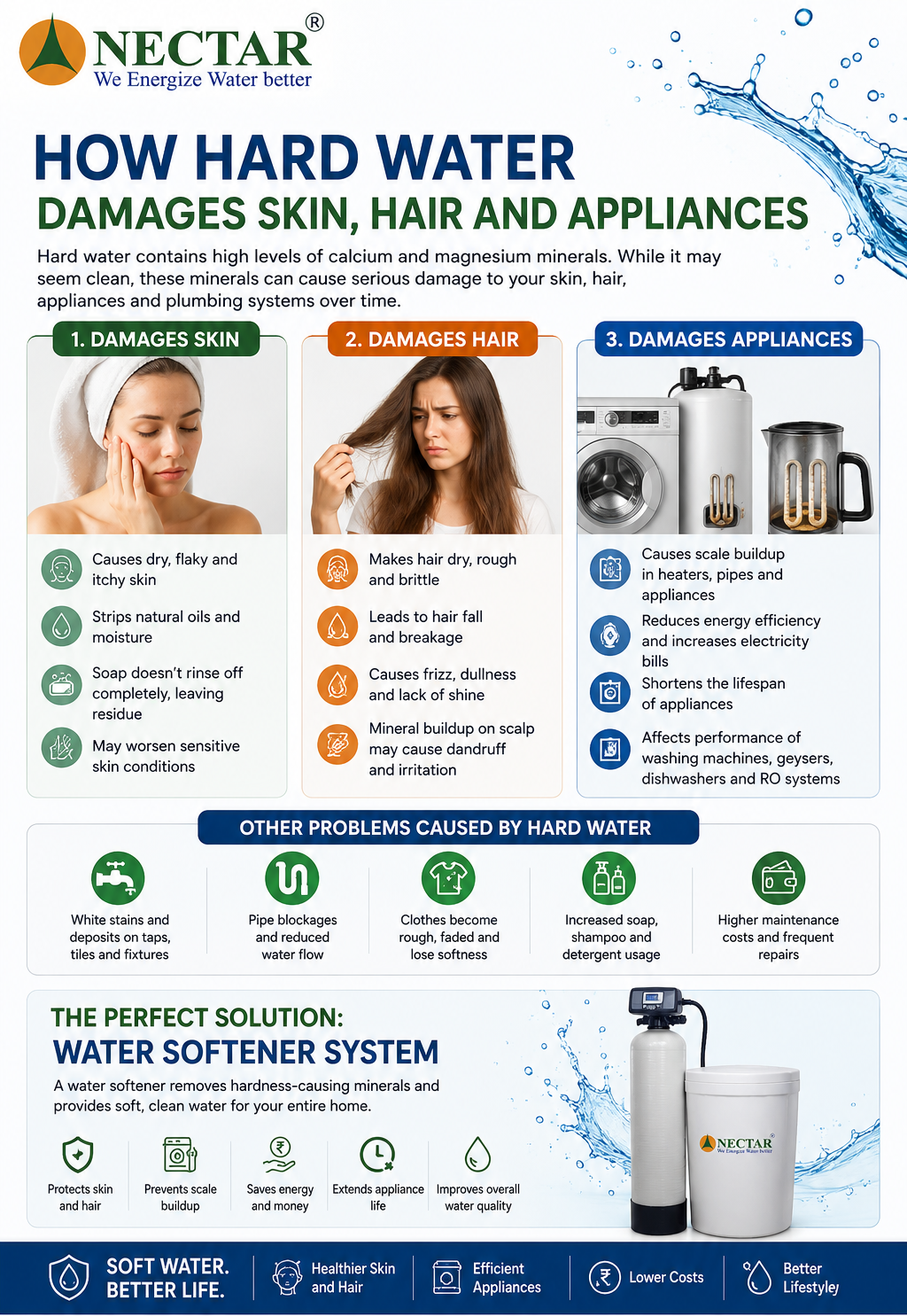
Many homeowners use hard water every day without realizing the long-term damage it can cause. Although hard water may appear clean and safe, it contains high levels of calcium and magnesium minerals that can negatively affect your skin, hair, plumbing systems, and household appliances. As a result, hard water often leads to increased maintenance costs, reduced appliance lifespan, and personal care issues.
Therefore, understanding how hard water affects your home and health is essential for finding the right water treatment solution.
What Is Hard Water?
Hard water contains dissolved minerals, primarily calcium and magnesium, that enter the water supply naturally as groundwater passes through rocks and soil. Consequently, borewell water and underground water sources usually contain higher levels of hardness.
Although these minerals are naturally occurring, excessive hardness can create various problems throughout your home.
Moreover, the effects of hard water become more noticeable over time as mineral deposits continue to accumulate.
How Hard Water Affects Your Skin
1. Causes Dry and Irritated Skin
Hard water prevents soap from rinsing away completely. As a result, soap residue and mineral deposits remain on the skin after bathing.
Consequently, your skin may feel:
- Dry
- Rough
- Tight
- Itchy
Furthermore, hard water strips away natural oils that help maintain healthy skin. Therefore, prolonged exposure can worsen skin discomfort.
2. May Aggravate Sensitive Skin Conditions
Because hard water leaves a mineral film on the skin, it can trigger irritation in people with sensitive skin.
As a result, individuals may experience:
- Redness
- Itching
- Skin sensitivity
- Increased dryness
Therefore, soft water is often recommended for maintaining healthier skin.
3. Reduces the Effectiveness of Skincare Products
Hard water minerals can interfere with cleansers, moisturizers, and other skincare products.
Consequently, products may not absorb properly, reducing their effectiveness.
As a result, users often spend more on skincare without achieving the desired results.
How Hard Water Damages Hair
1. Makes Hair Dry and Brittle
Because minerals accumulate on hair strands, hard water makes hair feel rough and lifeless.
As a result:
- Hair loses its softness
- Hair becomes brittle
- Natural shine decreases
Furthermore, styling and managing hair becomes more difficult.
2. Contributes to Hair Fall
Hard water weakens hair strands over time by creating mineral buildup on the scalp and hair follicles.
Consequently, hair may become more prone to:
- Breakage
- Split ends
- Excessive hair fall
Therefore, treating hard water can help improve overall hair health.
3. Causes Frizz and Dull Appearance
Mineral deposits create a coating on the hair surface.
As a result:
- Hair appears dull
- Frizz increases
- Hair feels sticky or heavy
Moreover, shampoos and conditioners become less effective when used with hard water.
4. Can Increase Dandruff Problems
Because hard water leaves residue on the scalp, it may contribute to scalp dryness and flaking.
Consequently, dandruff issues may become more noticeable over time.
How Hard Water Damages Household Appliances
1. Causes Scale Formation
One of the biggest problems caused by hard water is scale buildup.
As hard water flows through appliances, calcium and magnesium deposits accumulate on internal components.
Consequently, thick layers of scale form inside:
- Water heaters
- Geysers
- Washing machines
- Dishwashers
- Coffee machines
Therefore, appliance performance gradually declines.
2. Reduces Energy Efficiency
Scale deposits act as an insulating layer inside heating elements.
As a result:
- Appliances consume more electricity
- Heating takes longer
- Energy bills increase
Furthermore, equipment must work harder to deliver the same performance.
3. Shortens Appliance Lifespan
Because scale buildup places additional strain on appliance components, wear and tear increases significantly.
Consequently:
- Repairs become more frequent
- Maintenance costs rise
- Appliance lifespan decreases
Therefore, hard water often results in costly replacements.
4. Damages Washing Machines
Hard water leaves mineral deposits inside washing machines.
As a result:
- Clothes may feel rough after washing
- Detergent performance decreases
- Internal components wear out faster
Consequently, laundry quality and machine efficiency both suffer.
Additional Household Problems Caused by Hard Water
Stains on Bathroom Fixtures
Hard water leaves white deposits on:
- Taps
- Showerheads
- Tiles
- Glass partitions
As a result, cleaning becomes more difficult and time-consuming.
Pipe Blockages
Mineral deposits gradually accumulate inside plumbing systems.
Consequently:
- Water flow decreases
- Pressure drops
- Plumbing repairs become necessary
Increased Soap and Detergent Usage
Because hard water reduces lather formation, homeowners use more soap, shampoo, and detergent.
As a result, monthly household expenses increase.
Permanent Solution for Hard Water Problems
The most effective way to prevent hard water damage is by installing a Water Softener System.
A water softener removes calcium and magnesium minerals through advanced ion-exchange technology.
Consequently, the system provides soft water throughout the property.
Benefits of a Water Softener
- Protects skin and hair
- Prevents scale formation
- Improves appliance efficiency
- Extends equipment lifespan
- Reduces maintenance costs
- Improves water quality
- Lowers soap and detergent consumption
Therefore, a water softener offers a long-term solution to hard water problems.
Who Should Consider a Water Softener?
Water softeners are ideal for:
✔ Homes and Apartments
✔ Villas and Bungalows
✔ Hotels and Resorts
✔ Hospitals
✔ Commercial Buildings
✔ Educational Institutions
✔ Industrial Facilities
Therefore, any property experiencing hard water issues can benefit from water softening technology.
Conclusion
Hard water may seem harmless, but its long-term effects on skin, hair, appliances, and plumbing systems can be significant. From dry skin and damaged hair to scale buildup and costly appliance repairs, hard water affects both comfort and finances.
Therefore, addressing hard water problems early is essential. Installing a Water Softener System provides a permanent solution by removing hardness-causing minerals before they enter your home’s water supply.
As a result, you can enjoy healthier skin, softer hair, improved appliance performance, lower maintenance costs, and better overall water quality.