Why Is My Water Yellow or Brown? Causes, Risks, and Effective Solutions
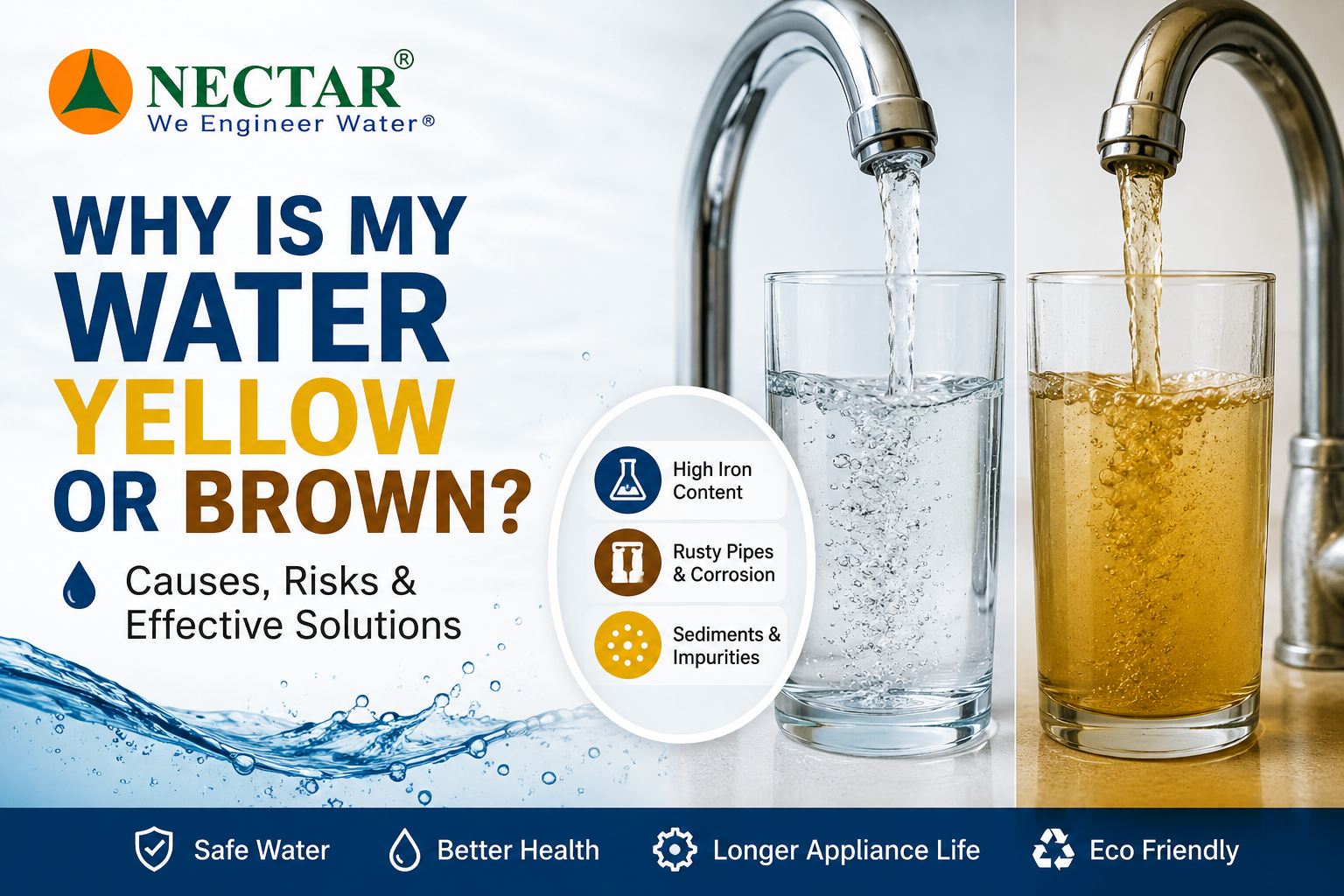
Have you ever turned on your tap and noticed yellow or brown water flowing out? If so, you’re not alone. Many homeowners and businesses experience this problem, especially when using borewell water or older plumbing systems. Although discoloured water may seem harmless at first, it often indicates underlying water quality issues that should not be ignored.
Understanding why your water is yellow or brown is the first step toward finding the right solution. In many cases, the discoloration is caused by excess iron, manganese, rust, sediments, or disturbances in the municipal water supply. Therefore, identifying the source of the problem can help protect your family’s health, plumbing system, and household appliances.
What Causes Yellow or Brown Water?
Yellow or brown water can occur for several reasons. While some causes are temporary, others require professional water treatment.
The most common causes include:
- High iron content
- Manganese contamination
- Rusty pipelines
- Sediment buildup
- Disturbed municipal water supply
- Borewell water minerals
- Corroded plumbing systems
Consequently, water may appear yellow, orange, reddish-brown, or muddy.
1. High Iron Content in Water
Iron is one of the most common reasons for yellow or brown water.
When groundwater passes through iron-rich soil and rocks, it dissolves iron minerals. As a result, borewell water often contains excessive iron.
Initially, the water may appear clear. However, once it comes into contact with air, the iron oxidizes and turns the water yellow, orange, or brown.
Signs of Iron in Water
- Yellow or brown water
- Metallic taste
- Reddish stains on sinks and toilets
- Brown stains on clothes
- Rust-coloured deposits
Therefore, an Iron Removal Plant is often the most effective solution.
2. Rusty Water Pipes
Older galvanized iron pipes can corrode over time.
Consequently, rust particles mix with the flowing water and change its colour.
Common signs include:
- Brown water after opening the tap
- Rust flakes in water
- Low water pressure
- Water becoming clear after a few minutes
Therefore, replacing old plumbing pipes may solve the problem.
3. Manganese Contamination
Although manganese occurs naturally in groundwater, excessive amounts can discolor water.
Depending on its concentration, manganese may cause:
- Brown water
- Black water
- Dark stains
- Metallic taste
Moreover, manganese often appears together with iron.
Therefore, a combined Iron and Manganese Removal System provides effective treatment.
4. Sediment and Dirt
Heavy rainfall, construction work, or pipeline maintenance can disturb sediments inside water supply lines.
Consequently, sand, clay, and suspended particles enter your water supply.
As a result, water appears muddy, yellow, or brown.
Fortunately, the problem is often temporary.
Sometimes local water authorities flush pipelines for maintenance.
During this process:
- Rust deposits loosen.
- Sediments move through pipelines.
- Water becomes temporarily discoloured.
Therefore, running the tap for several minutes may restore clear water.
Is Yellow or Brown Water Safe?
The answer depends on the cause.
Although naturally occurring iron is not usually harmful in small amounts, discoloured water may indicate contamination from rust, sediments, or harmful microorganisms.
Therefore, avoid drinking yellow or brown water until the cause is identified.
Professional water testing is always recommended.
Problems Caused by Yellow or Brown Water
Discoloured water affects more than appearance.
It can also cause:
Damage to Plumbing
Iron deposits accumulate inside pipes.
Consequently, water flow decreases over time.
Appliance Damage
Water heaters
Washing machines
Dishwashers
RO systems
Coffee machines
can all develop scale and rust deposits.
As a result, appliance lifespan decreases.
Stained Bathroom Fittings
Yellow or brown water leaves stubborn stains on:
- Wash basins
- Bathtubs
- Toilets
- Tiles
- Faucets
Therefore, cleaning becomes more difficult.
Laundry Problems
Iron-rich water causes:
- Yellow stains on white clothes
- Fabric discoloration
- Rough clothing
Consequently, clothes lose their original appearance.
How to Test Yellow or Brown Water
If your water changes colour, consider testing for:
- Iron
- Manganese
- pH
- Total Dissolved Solids (TDS)
- Turbidity
- Hardness
- Bacteria
Therefore, laboratory testing helps determine the correct treatment solution.
Best Solutions for Yellow or Brown Water
The right solution depends on the source of contamination.
Install an Iron Removal Plant
If iron causes discoloration, an Iron Removal Plant removes dissolved iron before it reaches your taps.
As a result:
- Water becomes clear.
- Metallic taste disappears.
- Stains are eliminated.
Install a Pressure Sand Filter
Pressure Sand Filters remove:
- Dirt
- Sand
- Suspended solids
- Turbidity
Consequently, water clarity improves significantly.
Activated Carbon Filter
Activated Carbon Filters remove:
- Colour
- Odour
- Organic contaminants
- Chlorine
Therefore, water becomes cleaner and fresher.
Reverse Osmosis (RO) System
RO systems remove:
- Dissolved salts
- Heavy metals
- Harmful contaminants
- Excess minerals
As a result, drinking water quality improves considerably.
Regular Plumbing Maintenance
Old pipes should be inspected regularly.
Replacing corroded plumbing prevents rust contamination and improves water quality.
Prevent Yellow or Brown Water
You can reduce water quality problems by:
- Testing borewell water regularly
- Servicing filtration systems
- Replacing old pipes
- Cleaning storage tanks
- Installing suitable water treatment equipment
- Maintaining RO systems
Consequently, your home receives consistently clean and safe water.
When Should You Call a Water Treatment Expert?
Consult a water treatment professional if:
- Water remains yellow or brown for several days.
- Rust stains continue appearing.
- Water smells metallic.
- Your appliances frequently develop scale.
- Laboratory reports show high iron or manganese levels.
Therefore, professional guidance helps you choose the most effective treatment system.
Why Professional Water Treatment Is the Best Solution
Professional water treatment systems offer:
- Long-term water quality improvement
- Protection for plumbing
- Better appliance performance
- Cleaner bathrooms
- Improved drinking water
- Reduced maintenance costs
Consequently, investing in the right filtration system protects both your family and your property.
If you have ever wondered, “Why Is My Water Yellow or Brown?”, the answer usually lies in iron, manganese, rust, sediments, or aging plumbing systems. Although some cases are temporary, persistent discoloration should never be ignored because it may indicate poor water quality.
Therefore, regular water testing and the installation of suitable treatment systems such as Iron Removal Plants, Pressure Sand Filters, Activated Carbon Filters, or Reverse Osmosis Systems can restore clear, safe, and healthy water. By addressing the root cause early, you can protect your family’s health, extend the life of your plumbing and appliances, and enjoy clean water every day.