Health Risks of Excess Iron in Drinking Water: Causes, Symptoms, and Effective Solutions
Iron is a naturally occurring mineral that plays an essential role in the human body. It helps produce healthy red blood cells and supports oxygen transport. However, excess iron in drinking water can create several health concerns and household problems. While small amounts of iron are generally safe, high iron concentrations can affect the taste, appearance, and quality of water. Therefore, understanding the health risks of excess iron in drinking water is essential for protecting your family’s health and ensuring a safe water supply.
Moreover, iron contamination is common in borewell water, groundwater, and wells, especially in areas with iron-rich soil. As a result, many homes and industries require effective water treatment systems to remove excess iron before using the water.
What Causes Excess Iron in Drinking Water?
Iron enters water naturally as groundwater passes through rocks and soil containing iron minerals. Consequently, the dissolved iron mixes with the water supply.
Common causes of excess iron include:
- Iron-rich underground rock formations
- Borewell water sources
- Corroded iron pipelines
- Rusting storage tanks
- Aging plumbing systems
- Industrial contamination
Therefore, regular water testing is essential to identify excessive iron levels before they cause problems.
Types of Iron Found in Water
Understanding the different forms of iron helps in selecting the right treatment system.
Ferrous Iron (Clear Water Iron)
Ferrous iron remains dissolved in water and is usually invisible when first drawn from the tap.
However, once exposed to air, it oxidizes and turns the water yellow, orange, or brown.
Ferric Iron (Red Water Iron)
Ferric iron is already oxidized and appears as reddish or brown particles in the water.
Consequently, it causes visible discoloration and sediment buildup.
Organic Iron
Organic iron combines with natural organic matter found in groundwater.
As a result, it becomes more difficult to remove using standard filtration methods.
Iron is an essential nutrient, and small amounts are generally safe to consume. However, excess iron in drinking water can cause several health issues and reduce water quality.
Although the World Health Organization (WHO) does not classify iron as a major health hazard at normal levels, concentrations above the recommended limit can lead to undesirable effects.
Therefore, treating iron-rich water is strongly recommended for both health and household protection.
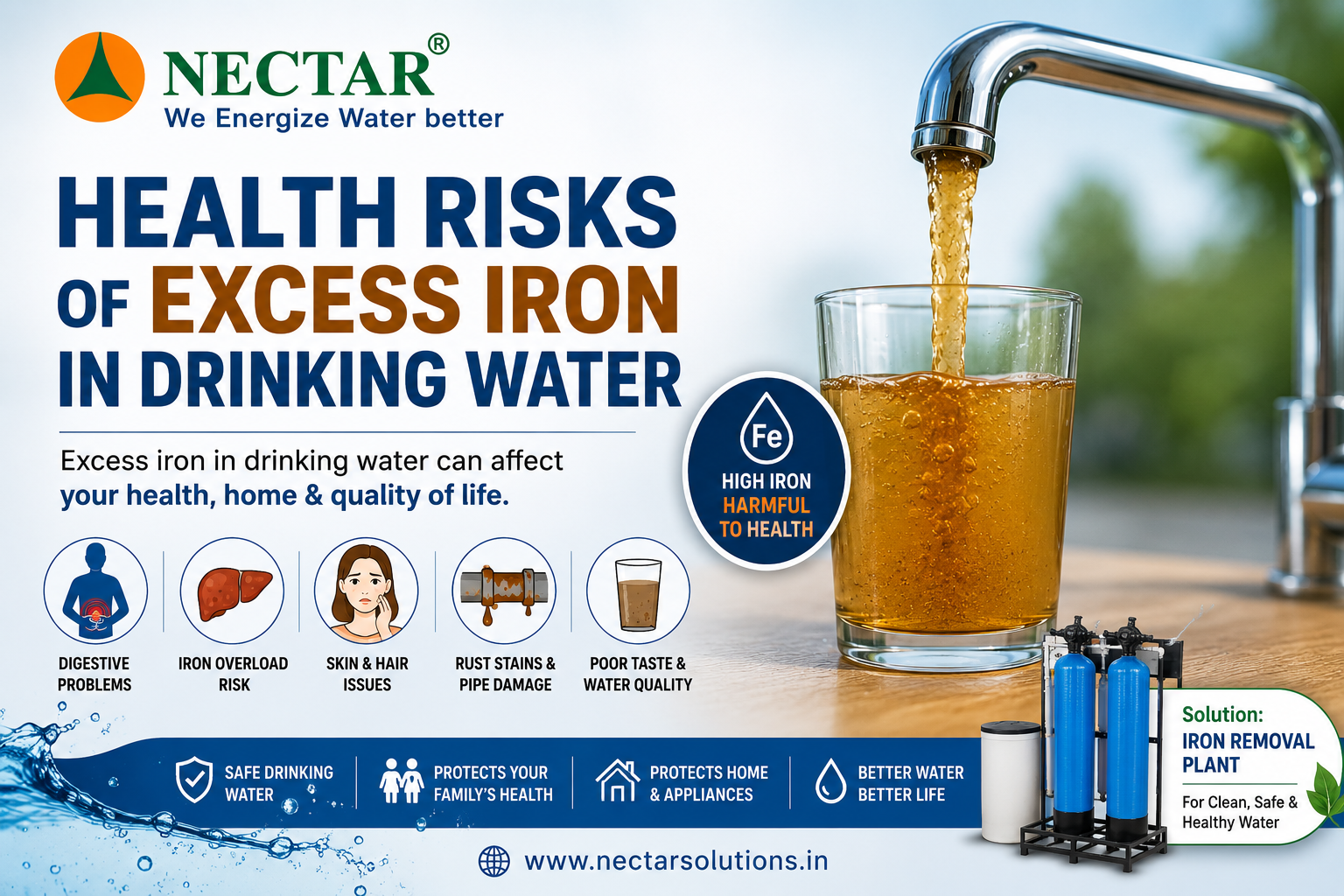
Health Risks of Excess Iron in Drinking Water
1. Digestive Problems
Drinking water with high iron levels may cause digestive discomfort in some individuals.
Common symptoms include:
- Stomach pain
- Nausea
- Vomiting
- Constipation
- Diarrhea
Therefore, people with sensitive digestive systems should avoid consuming iron-contaminated water.
2. Iron Overload
Although uncommon from water alone, prolonged exposure to very high iron levels may contribute to iron accumulation in the body, especially in individuals with conditions such as hemochromatosis.
Consequently, excessive iron may affect:
- Liver function
- Heart health
- Pancreas
- Joints
Therefore, people with iron metabolism disorders should consult a healthcare professional regarding their water quality.
3. Metallic Taste
One of the earliest signs of excess iron is a strong metallic taste.
As a result:
- Drinking water becomes unpleasant.
- Tea and coffee taste different.
- Cooking quality decreases.
Consequently, many families avoid drinking tap water altogether.
4. Growth of Iron Bacteria
Iron-rich water can encourage the growth of iron bacteria.
These bacteria create slimy deposits inside:
- Pipes
- Water tanks
- Filters
- Pumps
Although iron bacteria are generally not considered harmful to healthy people, they can reduce water quality and create unpleasant odours.
5. Skin Irritation
Bathing in water containing excessive iron may contribute to:
- Dry skin
- Skin irritation
- Itching
- Dull complexion
Moreover, soap becomes less effective in iron-rich water.
As a result, bathing becomes less comfortable.
High iron content may also affect hair health.
Common problems include:
- Dry hair
- Hair discoloration
- Rough texture
- Reduced shine
Therefore, treating water improves both skin and hair quality.
Iron contamination affects more than health.
It can also damage household plumbing and appliances.
Rust-Coloured Stains
Iron leaves stubborn stains on:
- Bathroom tiles
- Wash basins
- Toilets
- Bathtubs
- Kitchen sinks
Consequently, frequent cleaning becomes necessary.
Appliance Damage
Iron deposits accumulate inside:
- Washing machines
- Water heaters
- Dishwashers
- RO systems
- Coffee machines
As a result, appliance efficiency decreases while maintenance costs increase.
Plumbing Blockage
Over time, iron deposits build up inside pipes.
Consequently:
- Water pressure decreases.
- Pipe blockages occur.
- Plumbing repairs become expensive.
Laundry Problems
Iron-rich water causes:
- Yellow stains on clothes
- Fabric discoloration
- Rough clothing texture
Therefore, clothes lose their brightness after repeated washing.
If you notice yellow or brown water, metallic taste, or rust stains, you should test your water immediately.
Professional testing usually measures:
- Iron concentration
- pH
- Hardness
- Manganese
- Total Dissolved Solids (TDS)
- Turbidity
Therefore, accurate testing helps determine the most effective treatment solution.
Several water treatment systems effectively remove iron from drinking water.
Iron Removal Plant
An Iron Removal Plant oxidizes and filters dissolved iron before it reaches household taps.
Consequently, water becomes clear, safe, and free from metallic taste.
Pressure Sand Filter
Pressure Sand Filters remove:
- Suspended particles
- Oxidized iron
- Sediments
Therefore, they improve water clarity.
Activated Carbon Filter
Activated Carbon Filters remove:
- Unpleasant odours
- Organic impurities
- Chlorine
- Colour
Consequently, overall water quality improves.
Reverse Osmosis (RO) System
Reverse Osmosis systems remove:
- Dissolved minerals
- Heavy metals
- Harmful contaminants
- Excess iron (with proper pre-treatment)
As a result, drinking water becomes safer and healthier.
You can reduce iron-related problems by following these simple practices:
- Test borewell water regularly.
- Maintain filtration systems.
- Clean water storage tanks.
- Replace corroded pipelines.
- Install an Iron Removal Plant.
- Service water treatment equipment periodically.
Consequently, your family enjoys safe and clean water throughout the year.
Professional water treatment systems provide long-term protection against iron contamination.
Key benefits include:
- Crystal-clear water
- Improved drinking water quality
- Protection for plumbing
- Longer appliance life
- Better skin and hair care
- Reduced maintenance costs
- Reliable daily performance
Therefore, investing in an Iron Removal Plant is a smart solution for homes, apartments, commercial buildings, and industries.
Understanding the health risks of excess iron in drinking water is essential for maintaining a safe and healthy water supply. Although iron is an important nutrient, excessive amounts can affect water quality, create household problems, and contribute to health concerns in certain individuals. Moreover, iron-rich water can stain fixtures, damage appliances, and reduce the efficiency of plumbing systems.
Therefore, regular water testing and installing an appropriate Iron Removal Plant, along with other water treatment systems, can effectively eliminate excess iron and improve water quality. By taking preventive measures today, you can protect your family’s health, extend the life of your appliances, and enjoy clean, fresh, and safe drinking water every day.