Borewell Water Iron Removal Solutions: The Complete Guide to Clean, Safe, and Iron-Free Water
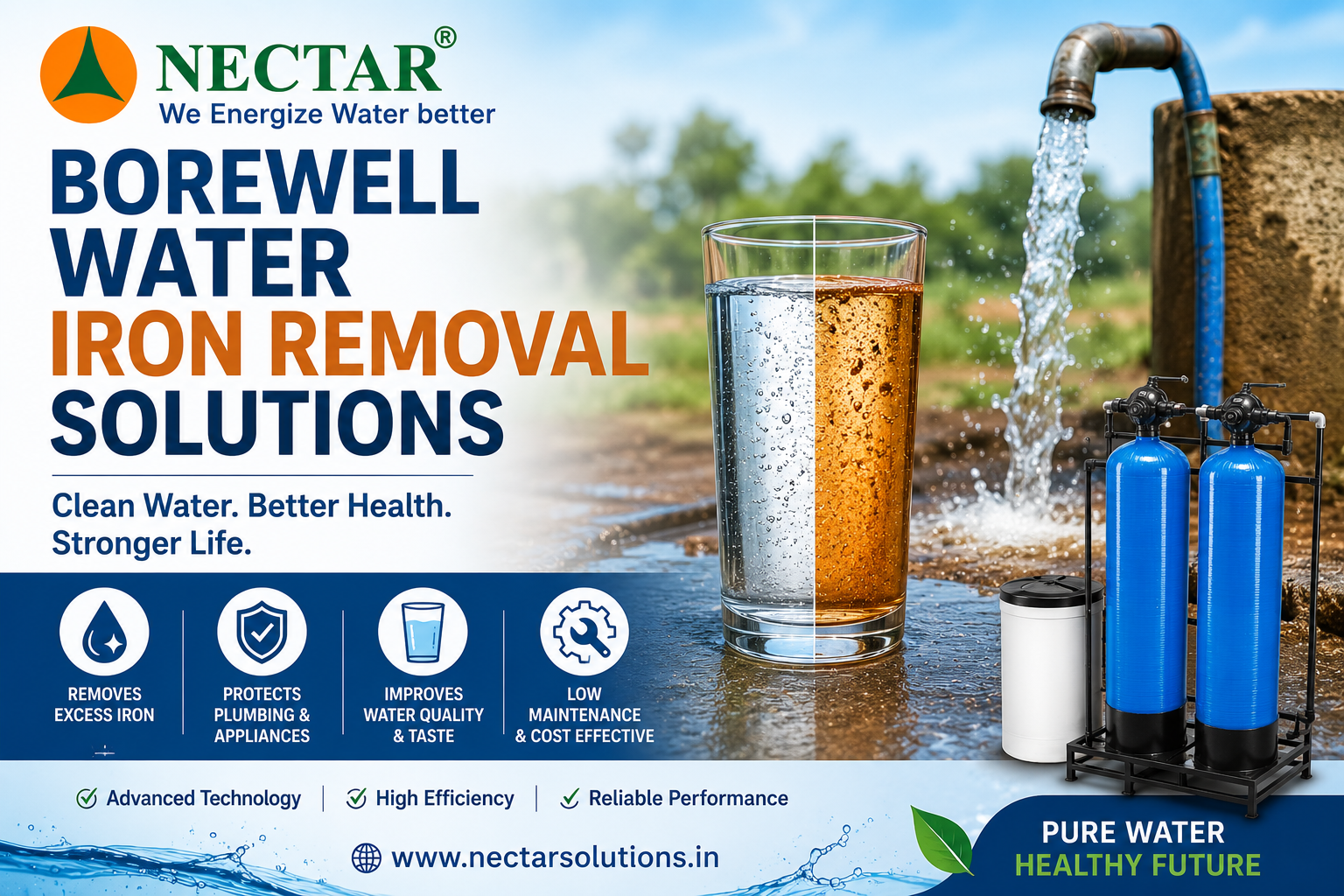
Borewell water is a dependable source of water for homes, apartments, commercial buildings, and industries across India. However, many borewells contain high levels of dissolved iron, which can affect water quality, damage plumbing systems, and create health concerns. If your tap water appears yellow, orange, or brown, has a metallic taste, or leaves rust stains on bathroom fittings and clothes, it is time to consider effective Borewell Water Iron Removal Solutions.
Fortunately, modern iron removal systems can eliminate excess iron efficiently and provide crystal-clear, safe, and healthy water. Therefore, choosing the right water treatment system helps protect your family, extends the life of your plumbing, and reduces maintenance costs.
What Is Iron in Borewell Water?
Iron is a naturally occurring mineral found in underground rocks and soil. As groundwater passes through these mineral-rich layers, it dissolves iron and carries it into borewells.
Consequently, borewell water often contains dissolved iron that may not be visible initially. However, when the water comes into contact with air, the iron oxidizes and turns the water yellow, orange, or brown.
Therefore, regular water testing is essential to determine the iron concentration before selecting a treatment solution.
Common Causes of Iron in Borewell Water
Several factors contribute to high iron levels in borewell water, including:
- Iron-rich underground rock formations
- Deep groundwater sources
- Corroded pipelines
- Rusted storage tanks
- Aging plumbing systems
- Natural mineral deposits
As a result, untreated borewell water may become unsuitable for drinking and household use.
Signs You Need a Borewell Water Iron Removal Solution
If your borewell water shows any of the following signs, it may contain excess iron:
- Yellow, orange, or brown coloured water
- Metallic taste in drinking water
- Rust-coloured stains on sinks, toilets, and bathroom tiles
- Brown stains on clothes after washing
- Unpleasant odour in water
- Iron deposits inside pipelines
- Low water pressure due to pipe blockage
- Frequent clogging of taps and showerheads
Therefore, early detection can help prevent costly plumbing repairs and appliance damage.
Problems Caused by Excess Iron in Borewell Water
Although iron is an essential mineral for the human body, excessive amounts in water can create several problems.
1. Stains on Bathroom Fixtures
Iron-rich water leaves stubborn reddish-brown stains on:
- Wash basins
- Toilets
- Bathtubs
- Bathroom tiles
- Kitchen sinks
Consequently, cleaning becomes more difficult and time-consuming.
Over time, iron deposits accumulate inside pipelines.
As a result:
- Water pressure decreases.
- Pipes become clogged.
- Plumbing maintenance costs increase.
3. Appliance Damage
Iron deposits reduce the efficiency of:
- Washing machines
- Water heaters
- Dishwashers
- RO purifiers
- Coffee machines
- Water pumps
Therefore, appliances require more frequent repairs and replacements.
4. Poor Water Quality
High iron levels often cause:
- Metallic taste
- Unpleasant smell
- Cloudy or discoloured water
Consequently, the water becomes less suitable for drinking and cooking.
5. Laundry Problems
Iron-rich water can:
- Stain white clothes
- Fade coloured fabrics
- Make clothes feel rough
As a result, garments lose their brightness and softness.
Best Borewell Water Iron Removal Solutions
Choosing the right iron removal system depends on the iron concentration and water quality.
Iron Removal Plant (IRP)
An Iron Removal Plant is one of the most effective solutions for treating borewell water.
The system oxidizes dissolved iron and filters it through specialized filter media.
As a result, it:
- Removes dissolved iron
- Eliminates yellow and brown water
- Removes metallic taste
- Prevents rust stains
- Protects plumbing systems
Therefore, it is the preferred choice for homes, apartments, commercial buildings, and industries.
Pressure Sand Filter
A Pressure Sand Filter removes:
- Suspended solids
- Oxidized iron
- Dirt
- Sand
- Turbidity
Consequently, the water becomes cleaner before further purification.
Activated Carbon Filters improve water quality by removing:
- Bad odour
- Organic contaminants
- Colour
- Chlorine
Therefore, water becomes fresher and more pleasant for daily use.
For drinking water applications, Reverse Osmosis systems remove:
- Dissolved salts
- Heavy metals
- Harmful contaminants
- Remaining iron (after proper pre-treatment)
As a result, the water becomes safe, healthy, and suitable for consumption.
An Iron Removal Plant uses a multi-stage filtration process.
Step 1 – Oxidation
Initially, dissolved ferrous iron reacts with oxygen.
Consequently, it converts into ferric iron.
Step 2 – Filtration
Next, the oxidized iron passes through specialized filter media.
As a result, iron particles become trapped inside the filter.
Step 3 – Clean Water Supply
Finally, the treated water flows into the storage tank or distribution system.
Therefore, users receive crystal-clear, odour-free, and iron-free water.
Installing a professional iron removal system provides numerous long-term benefits.
Key Benefits
- Removes dissolved and oxidized iron effectively
- Eliminates yellow, orange, and brown water
- Removes metallic taste and unpleasant odour
- Prevents rust stains on bathroom fittings
- Protects plumbing systems
- Extends appliance lifespan
- Improves drinking water quality
- Reduces maintenance costs
- Provides continuous clean water
- Suitable for residential and industrial use
Consequently, homeowners and businesses enjoy better water quality and long-term savings.
Iron Removal Plants are widely used in:
- Individual Houses
- Villas
- Apartments
- Hotels and Resorts
- Hospitals
- Schools and Colleges
- Commercial Buildings
- Manufacturing Industries
- Food Processing Units
- Pharmaceutical Industries
- Agriculture and Farms
- Municipal Water Treatment Plants
Therefore, these systems provide reliable iron removal across various sectors.
Regular maintenance ensures efficient performance and a longer service life.
Follow these maintenance tips:
- Backwash the filter media regularly.
- Replace filter media when recommended.
- Inspect valves and pipelines periodically.
- Test borewell water every six months.
- Schedule annual professional servicing.
As a result, your iron removal system continues to perform efficiently for many years.
Before purchasing a system, consider the following factors:
- Iron concentration in water
- Daily water usage
- Borewell water quality
- Installation space
- Automatic or manual operation
- Maintenance requirements
- Future water demand
Therefore, professional water testing and expert consultation help you choose the most suitable system.
Nectar Solutions is a trusted manufacturer and supplier of advanced water treatment systems with years of industry experience. We provide customized Borewell Water Iron Removal Solutions for residential, commercial, and industrial applications.
Our solutions offer:
- Advanced filtration technology
- Premium-quality components
- Customized system design
- Professional installation
- Annual Maintenance Contracts (AMC)
- Prompt after-sales service
- Reliable technical support
Therefore, choosing Nectar Solutions ensures long-lasting performance, superior water quality, and complete customer satisfaction.
Excess iron in borewell water can cause yellow or brown water, rust stains, unpleasant taste, plumbing damage, and reduced appliance efficiency. Fortunately, advanced Borewell Water Iron Removal Solutions effectively eliminate iron and restore clean, safe, and healthy water for everyday use.
Whether you own a home, apartment, commercial building, or industrial facility, installing an Iron Removal Plant is a smart investment. Therefore, test your borewell water, choose the right treatment system, and enjoy crystal-clear water while protecting your family, plumbing, and appliances for years to come.